Perspectives on AI, risk analytics, automation, and turning raw data into decisions that matter.

Creating Power BI dashboards from scratch often involves repetitive layout tasks: creating cards, placing slicers, dragging visual components around the canvas, and tweaking pixel alignments. While Power BI Desktop handles data modelling well, building visual report layouts manually remains a time-consuming chore. To automate this workflow, we built an open-source Power BI MCP (Model Context […]
Policy engines execute governance decisions. But institutions also need a way to reconstruct those decisions, the controls in effect at the time, and the evidence that supports them. Institutional traceability is the layer that turns a governance stack into a verifiable system of record.
Evaluation can show whether an AI system is performing acceptably. It cannot, by itself, decide what should happen next. AI policy engines fill that gap by translating governance logic into repeatable runtime decisions across agents, applications, and workflows.
AI gateways control whether a model call is allowed to happen. Evaluation systems determine whether autonomous behavior remains acceptable after that access has been granted. In financial institutions, that means measuring performance continuously, defining thresholds explicitly, and inserting human review or restrictions before failure becomes systemic.

Identity, lineage, and semantics make AI systems interpretable. They do not, by themselves, control model access. AI gateways are the enforcement layer that determines whether a model call is allowed to happen at all, which model path is permitted, and what runtime constraints apply.
Lineage can show how a decision was made. It cannot guarantee that the data, features, rules, and policy terms behind that decision meant the same thing everywhere they were used. That is the role of the semantic layer: to make business definitions machine-readable, reusable, and governable so AI systems can operate correctly at scale.
Most financial institutions say they have data lineage. What they usually have is a reconstruction layer: metadata inferred from logs, scheduler state, warehouse queries, notebook history, catalog scans, and pipeline definitions. That is useful for debugging. It is not enough for governance. That distinction matters more as AI moves deeper into regulated financial activity. When […]
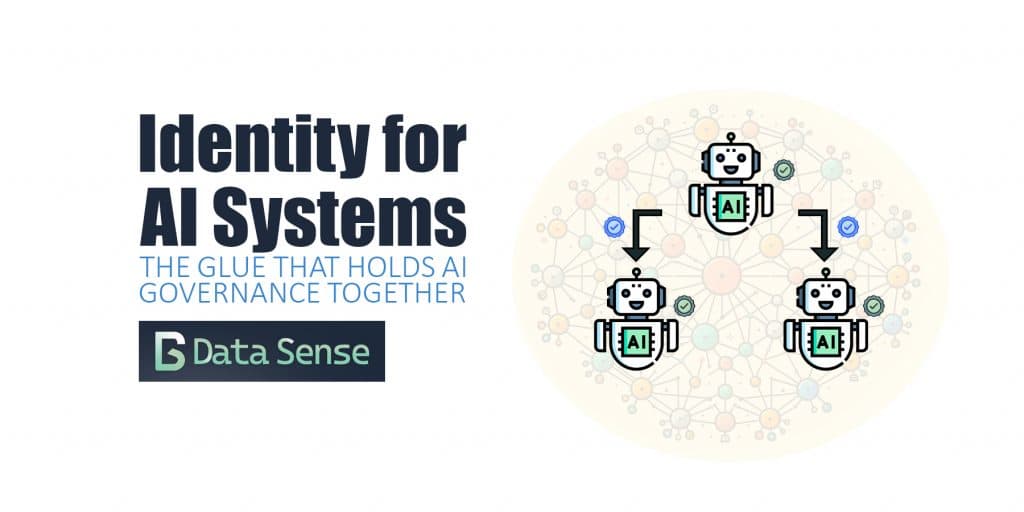
AI systems are starting to behave less like tools and more like participants in an operating environment. They retrieve data, apply transformations, and trigger downstream actions with increasing autonomy. As discussed in the shift toward machine-operational metadata, these systems are no longer just interacting with documentation, they are interacting with structured, executable context. Identity is what binds these systems together across data, decisions, and execution. In practical terms, identity in AI systems refers to cryptographically verifiable identifiers for agents, datasets, and transformations that enable traceability, accountability, and enforceable governance. The system can describe what exists, including datasets, pipelines, and agents, but it cannot reliably establish who is acting, what is being acted on, and how a result was produced in a way that can be verified.
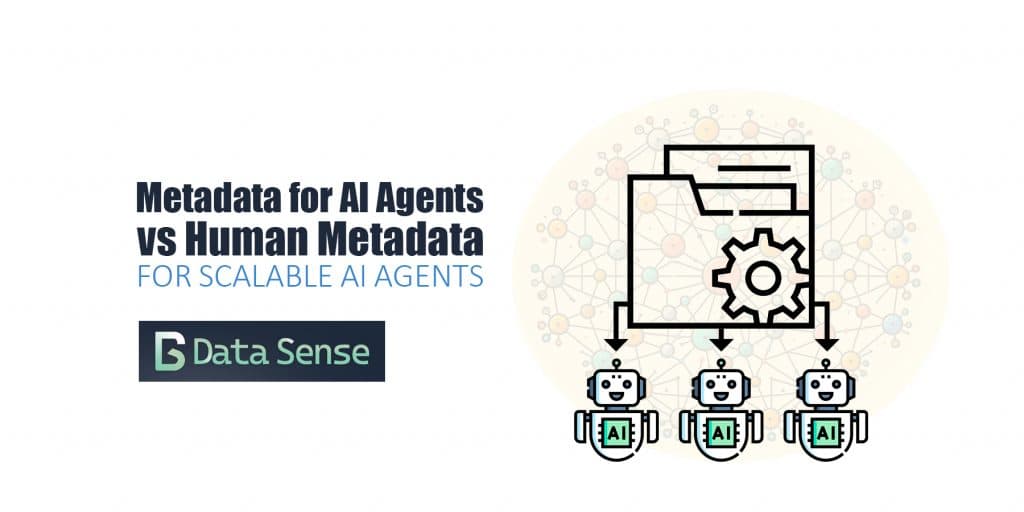
In our previous article, we argued that governance is the prerequisite for scalable AI systems. As organizations move from experimentation to deploying autonomous agents, governance can no longer rely on human oversight alone. Policies, controls, and access rules must be interpretable by machines. For this to work, AI systems require institutional traceability: the ability to understand where information originated, how it was transformed, and what policies govern its use. Metadata is the layer that makes those controls executable. In order for AI agents to operate safely and reliably, metadata must evolve from human-oriented documentation into machine-readable infrastructure that encodes provenance, purpose, permissions, and lineage directly into the data ecosystem. This article continues our exploration of the architectural foundations required for scalable AI systems, focusing on the role metadata plays in making governance executable by machines.
